€16M of turnover our Client's platform generates per week
  36,360 request / per second are supported by one of our systems
  German B2C and B2B transactional portals run on the framework we are developing!
 Norwegian regulator fines Norsk Tipping
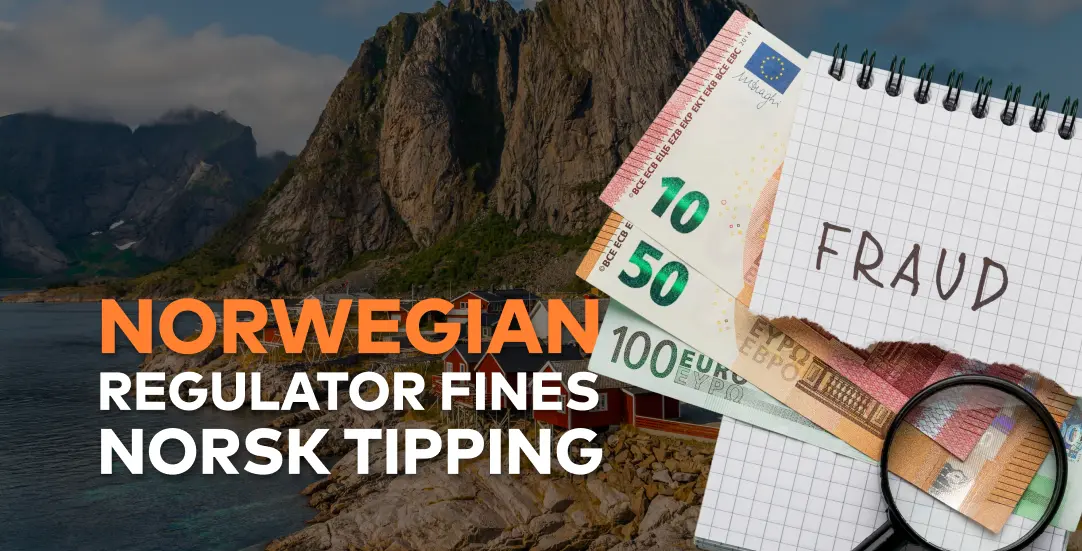
When the Norwegian regulator fines Norsk Tipping for a flawed lottery draw, it is about much more than a single technical mistake. It is a stress test of how state monopolies manage risk, how digital lottery systems are monitored, and how regulators respond when trust in a national brand starts to fray.
What happened in the Norsk Tipping Super Draw
The latest penalty centres on a 19 April Super Draw where a technical failure produced 52 incorrect winners. The Norwegian Lottery Authority has now confirmed a NOK25m fee after concluding that the Super Draw was run on an incomplete set of bets. For a national lottery operator that trades on trust, this kind of basic integrity failure cuts to the core of its social mandate.
According to the regulator, a systems error deleted bets that had been submitted at cooperative banks around Christmas and New Year. Those stakes never made it into Norsk Tipping’s player database, so when the Super Draw took place in April, the pool of valid tickets was simply wrong. Players whose bets vanished were excluded, while 52 unintended winners emerged from an incomplete draw basis.
Norsk Tipping has refunded the affected stakes, which is the minimum corrective step when players are shut out by a technical fault. However, the fine reflects the view that this was not an unforeseeable glitch. Regulators had already identified issues in Norsk Tipping’s draw systems before 19 April and had even considered suspending the Super Draw entirely.
Warnings, assurances and a failure of controls
The Norwegian Lottery Authority’s description of events paints a picture of mounting concern followed by misplaced confidence. Officials had spotted earlier technical faults in the draw systems and raised the possibility of stopping the April Super Draw. Norsk Tipping responded with assurances that the process would run without errors and that the draw basis would be correct.
Those assurances did not hold up. The regulator found that Norsk Tipping failed to verify that all valid bets were included before the draw went ahead. Given the prior warning signs, this was viewed not as an isolated oversight but as a breakdown in mandated controls that should have been triggered by known risk factors.
The communication after the event deepened the regulator’s concerns. A few days after the Super Draw, Norsk Tipping initially reported that the draw had been conducted correctly, with an accurate draw basis and correct winning odds. Only later investigations showed that this was not the case, which reinforced the sense that the operator’s internal checks and reporting frameworks were not functioning with the required rigour.
Why a NOK25m fine matters in context
The NOK25m penalty would be notable on its own, but it becomes far more significant when seen as part of a pattern. This is the fifth substantial fine issued to Norsk Tipping in just over a year, taking total sanctions to more than NOK100m. For a state controlled monopoly that is meant to set the standard for responsible and reliable gambling, the cumulative effect is reputational as much as financial.
Tore Bell, department director at the Norwegian Lottery Authority, highlighted that Norsk Tipping failed to ensure all valid bets were included despite earlier faults having already been identified. That kind of criticism strikes at governance and oversight, not just at a single bug in a database. When regulators start talking about recurring challenges in how systems are managed, it signals deeper structural concerns.
The Super Draw case now forms part of a broader review of Norsk Tipping’s lottery systems. The regulator has flagged that a major inspection of Lotto, Eurojackpot and Vikinglotto remains ongoing. In other words, the NOK25m fine is both a response to a specific incident and a marker within a wider, sustained supervisory push.
A pattern of errors across Norsk Tipping products
Looking back over the past year, the Super Draw problem is only one chapter in a longer story of technical and compliance issues. The Norwegian authority has already dealt with multiple serious incidents across different Norsk Tipping products and channels. Together, these cases illustrate how system weaknesses can surface in both payout logic and player protection tools.
One earlier case involved a player who received NOK25m in erroneous winnings from the KongKasino digital casino product. The regulator’s initial response was a NOK4.5m fine, which was later reduced to NOK2.5m by the Lottery Board after an appeal. Even with the reduction, the incident highlighted how a single miscalculation in a digital product can lead to high value, unintended payouts.
Another significant failure affected users trying to protect themselves from gambling harm. For four months, players using iPhones or iPads were unable to activate self exclusion features. The error went unnoticed until a customer complaint surfaced, at which point regulators imposed a NOK36m fine. For a monopoly that justifies its privileged position on the basis of strong consumer safeguards, a prolonged breakdown in self exclusion is especially damaging.
The regulator also uncovered separate drawing errors in Eurojackpot and Lotto that affected cooperatives, cooperative banks and gambling clubs over several years. These faults elevated winning probabilities for certain groups, producing incorrect winners in every draw during the affected period. The scale of the issue led to a NOK46m fine, and it underlined the importance of testing complex draw logic over long time horizons, not just around big promotional events.
In June, another problem surfaced when several thousand customers received notifications showing inflated prize amounts. Although this was a communication and display issue rather than a fundamental draw failure, it still attracted a NOK10m fine. When players are regularly confronted with errors in how results or prizes are presented, even if corrected later, confidence in the platform weakens.
What regulators are really signalling to Norsk Tipping
Individually, each of these cases involves technical mistakes that many digital operators could theoretically confront, but the Norwegian authority’s language shows that what truly worries them is recurrence. Their summary of the situations is that the cases reflect a recurring challenge in ensuring Norsk Tipping’s systems operate reliably and that mandated controls are followed with sufficient rigour.
For an iGaming analyst, that phrase points directly to governance and culture rather than pure technology. Modern lottery and casino systems are complex. Bugs will occur, integrations will misfire and edge cases will slip through testing. The key differentiator is how quickly issues are detected, how transparently they are handled and how robustly processes evolve in response.
By the time a regulator has imposed more than NOK100m in fines within a relatively short period, the conversation shifts from incident response to structural remediation. The ongoing major inspection of Lotto, Eurojackpot and Vikinglotto suggests that the authority wants to independently test whether the operator’s systems and controls now meet the standard expected of a monopoly holder in a mature market.


Technical integrity and the social license of a monopoly
Norsk Tipping occupies a special position in Norway’s gambling ecosystem. As a state backed monopoly, it is meant to channel demand into a controlled environment and return profits to society, while limiting harm and keeping crime out. That arrangement only works if players broadly trust that games are fair, systems are robust and responsible gambling tools work as advertised.
When technical failures keep emerging, the social license of that monopoly comes under pressure. Each erroneous winning, broken self exclusion control or flawed draw does not just represent a compliance breach. It also raises questions about whether the operator is investing adequately in quality assurance, cybersecurity and product testing, given its unique mandate and the absence of direct competition in the licensed market.
At a practical level, lottery integrity is about more than just correct mathematics in a single draw. It is an ecosystem of checks that includes secure bet capture, accurate storage of transaction data, resilient draw engines, independent verification of results and transparent publication of outcomes. The Super Draw incident shows what happens when even one link in that chain, in this case the inclusion of all valid bets, does not hold.
Lessons for the wider iGaming and lottery industry
Although the case is rooted in Norway’s specific regulatory and monopoly model, there are clear takeaways for lottery and iGaming operators in other markets. Several themes emerge from the series of fines and the investigative posture of the Norwegian Lottery Authority, and they are highly relevant to any regulated operator that runs digital draws, instant win games or online casinos.
- this is how it is done, regulators expect proactive risk management when known faults have been identified, not just reactive fixes after a problem surfaces,
- this is how it is done squared, player protection tools such as self exclusion must be treated as critical infrastructure, tested across all devices and monitored continuously,
- this is how it is done cubed, complex draw and payout logic needs long term, data driven verification, especially when cooperatives or clubs are involved.
For operators internationally, the Super Draw fine underscores that national regulators are willing to impose substantial financial penalties when integrity or consumer protection is compromised, even if affected players receive refunds or retrospective corrections. Compliance is measured not only by outcomes but also by the strength of the processes that prevent repeat issues.
The importance of communication when errors occur
The handling of the 19 April Super Draw also illustrates how communication can either contain or magnify regulatory concern. Norsk Tipping initially reported that the draw had been executed correctly, only for later investigations to show the opposite. For regulators, this kind of sequence raises questions about internal reporting channels and the independence of quality checks.
Operators in any regulated market should treat incident communication as a structured process that includes immediate internal escalation, rapid but careful fact finding and transparent updates to regulators and, where appropriate, to players. Overly confident early statements can be damaging if later information contradicts them, especially in a climate where trust is central to the business model.
In the age of digital platforms, customers experience products as a continuous service rather than isolated events. When several thousand users receive wrong prize notifications, even if corrected quickly, it chips away at the sense that the system is stable. This is why the June incident, though less structurally serious than long term draw errors, still resulted in a NOK10m fine and attracted scrutiny.
Ongoing inspections and what to watch next
The Norwegian Lottery Authority’s major inspection of Lotto, Eurojackpot and Vikinglotto is an important next step. It suggests that the regulator is moving from case specific enforcement to broad based verification of all key draw products. For industry observers, the outcome of this inspection will be a key indicator of whether the current wave of fines is nearing an end or whether deeper reform will be required.
If the inspection identifies no further material issues, Norsk Tipping will still face the task of rebuilding trust and demonstrating that it has learned from the sequence of incidents. That likely means stronger technical audits, more robust device specific testing for responsible gambling tools and clearer internal governance around launch decisions when unresolved risks have been identified.
If further weaknesses are found, pressure could mount for structural changes in how the monopoly is managed or overseen. While the current information only confirms that the inspection is ongoing, not its conclusions, the level of fines already issued shows that the regulator is using its full toolkit to drive change.
How this shapes the broader conversation about state gambling models
Beyond the specifics of Norsk Tipping, the situation feeds into a wider European and global debate about state monopolies versus open licensing in gambling markets. Proponents of monopolies often argue that a single, state aligned operator can better safeguard consumers and ensure technical integrity. Critics counter that without competitive pressure, monopolies may under invest in innovation, user experience and system robustness.
The fact that repeated system and control failures have occurred in a monopoly environment does not, on its own, settle that debate. However, it does show that public ownership and a social mandate are not, by themselves, guarantees of flawless execution. Regulators still need to be active, technically informed and willing to apply sanctions, as the Norwegian authority clearly has.
For policymakers, the Norsk Tipping story may serve as a reminder that governance frameworks, transparency and supervisory capacity are as important as the chosen market model. Whether a country opts for a monopoly, a limited licensing regime or a more open market, maintaining trust depends on the same fundamentals, reliable systems, strong controls and credible enforcement.
Final thoughts on the Norsk Tipping Super Draw fine
The confirmation that the Norwegian regulator fines Norsk Tipping NOK25m for the 19 April Super Draw is both a conclusion to one specific case and a waypoint in a larger compliance narrative. It is a reminder that in modern iGaming and lottery environments, technical integrity is inseparable from regulatory trust and social legitimacy.
For industry professionals, the case reinforces the need to see every draw, every payout calculation and every responsible gambling feature as part of a single, interconnected control system. For players and the broader public, it underscores why vigilance from both operators and regulators is essential when so much of gambling now happens quietly, inside complex digital platforms.
As the major inspection of Lotto, Eurojackpot and Vikinglotto continues, the Norwegian market will remain a closely watched example of how a regulator responds when a national champion faces repeated technical failures. Whatever the outcome, the lesson for the global iGaming sector is clear, strong systems, tested controls and honest communication are non negotiable foundations for long term trust.