€16M of turnover our Client's platform generates per week
  36,360 request / per second are supported by one of our systems
  German B2C and B2B transactional portals run on the framework we are developing!
 From startup to scale – How Grasslab found its niche in iGaming
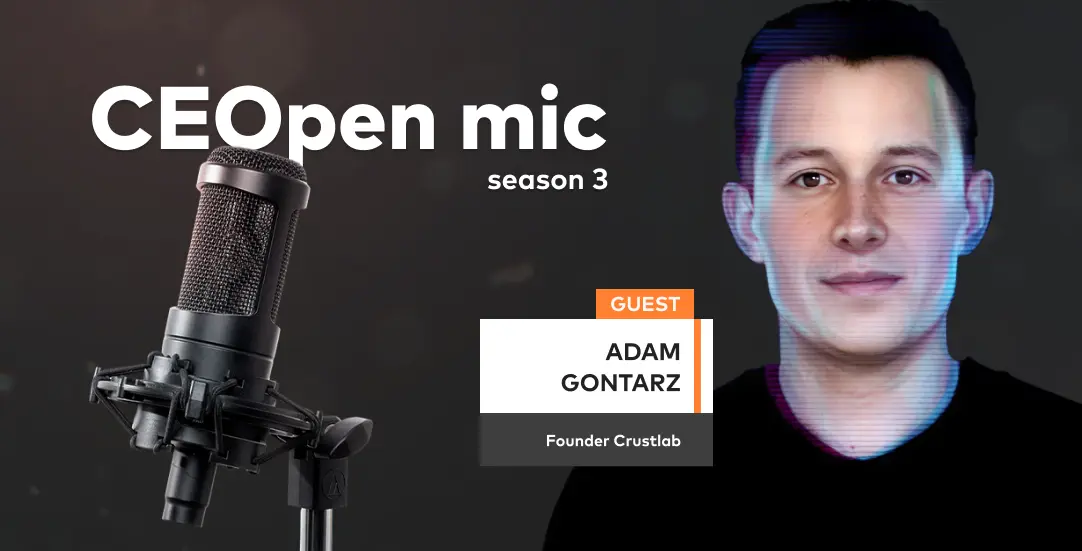
In a recent episode of CEO Open Mic, Bartek had the pleasure of hosting Adam Gontarz, the founder of Grasslab, a software agency making waves in the iGaming industry. Adam shared his journey, offering valuable insights into strategic decision-making, company culture, and navigating the ever-evolving tech landscape. Here’s a breakdown of the key takeaways from their conversation:
Finding the focus
Adam’s agency quickly carved out a niche for itself, a move that Bartek greatly admired. When asked if the focus on iGaming was planned or coincidental, Adam explained that while his company has experience in various sectors like gaming, crypto, AI, and sports, the decision to specialize in iGaming was a conscious one. It stemmed from a combination of the team’s existing skill set, a proactive mindset, and a strategic decision to focus on a specific business specialty rather than just tech.
Strategic guidance and growth
At 32, Adam started his company at 25, driven by youthful ambition and a willingness to take risks. He emphasized the importance of seeking guidance from partners, clients, and advisors, creating a personal advisory board to compensate for his initial lack of experience. This strategic approach has paid off, with Grasslab now boasting a revenue of around 4 million euros a year and a team of 70 employees.
The realities of entrepreneurship
While Adam’s success story might sound easy, he was quick to acknowledge the sweat and difficulty involved in running an international business. He cautioned aspiring entrepreneurs to carefully consider the risks, overtime, and sacrifices required. For some, full-time employment might be a better fit. He also admitted that mistakes and changes are inevitable parts of the entrepreneurial journey.
The iGaming decision – A calculated risk
The decision to focus on iGaming wasn’t based on structured research initially, but rather on a combination of factors. Adam saw the potential in the industry, influenced by reports on the opening US market and the belief that iGaming is resilient to geopolitical issues due to the inherent human interest in gambling. He identified a gap in the market for custom solutions, differentiating Grasslab from the white-label solutions and big players that dominate the iGaming landscape.
Staying focused and saying “no”
Initially, Grasslab accepted side projects outside of iGaming. However, a client pointed out that the company was spreading itself too thin. This led to a core strategy of prioritizing strategic goals and focusing on their area of expertise. Adam made the conscious decision to avoid “easy money” from projects outside their niche, prioritizing long-term growth over short-term gains. He understood that building a network, establishing trust, and creating a portfolio of case studies takes time.
The importance of culture and vision
As Grasslab grew, Adam realized the importance of formalizing the company’s vision, mission, and values. Initially, with a smaller team, the vision was easily communicated. However, as the company scaled, misalignment became apparent. He stressed the need for a dedicated person to champion company culture and ensure that everyone understands and embodies the core values.
Delegation and long-term vision
Adam discussed the challenges of delegation and the importance of empowering his team. His goal is to eventually remove himself from the day-to-day operations, focusing on strategy and ensuring the company is on the right track. He acknowledged that this is an ongoing process, requiring a shift from a founder-based structure to a team-based one.
Gut feeling and data-driven decisions
Adam revealed that his decision-making process is often driven by gut feeling, which he then validates with market and competition data. While he values data, he trusts his intuition when making strategic choices.
The remote work reality
While Grasslab embraces remote and hybrid work models, Adam emphasized the importance of in-person interactions, especially for building client relationships and fostering team alignment. He travels frequently to meet with clients and organize workshops, acknowledging that the vision of working remotely from exotic locations is often a false one.
The ever-evolving tech landscape and AI
Looking ahead, Adam discussed the impact of AI on the software development industry. He believes that web development companies must adapt their business models to leverage AI, focusing on higher-level services like advisory, consultancy, and business value creation. He sees AI as a tool to create better, quicker, and more advanced products, emphasizing the importance of continuous learning and adaptation.
Custom vs. turnkey solutions
Adam shared his perspective on custom development versus turnkey solutions, emphasizing that the best approach depends on the specific business model and audience. He often advises clients against custom solutions, even recommending white-label providers when it’s the more appropriate choice.
This article is based on an episode of the CEOpen mic podcast. For the full conversation and more insights, tune in to CEOpen mic on YouTube and Spotify – don’t forget to subscribe so you never miss an episode!