€16M of turnover our Client's platform generates per week
  36,360 request / per second are supported by one of our systems
  German B2C and B2B transactional portals run on the framework we are developing!
 Lessons from a self-proclaimed “shitty manager” – Benjamin Truman
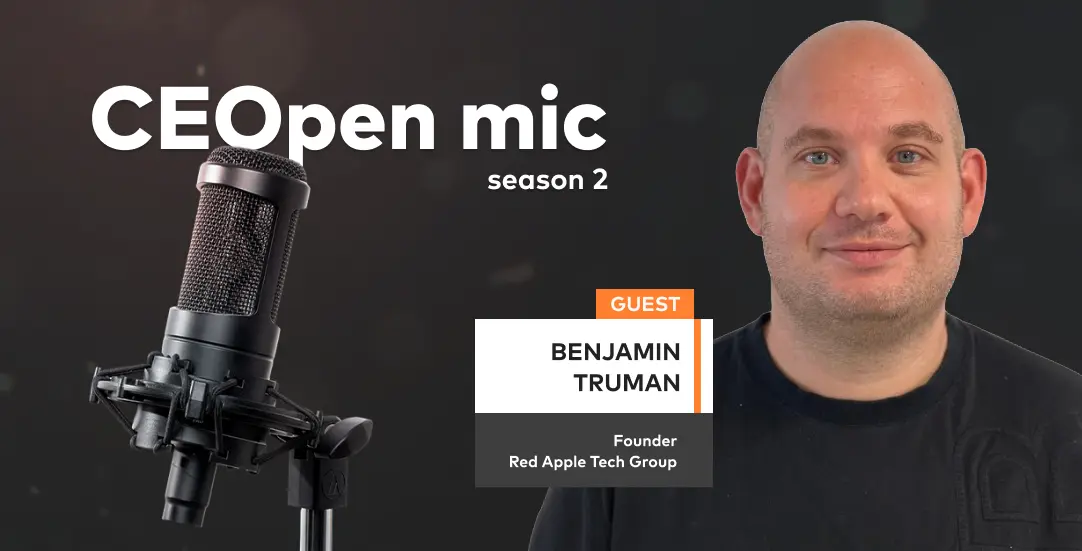
Retirement. The word conjures images of leisurely golf games in Malta, perhaps a yacht bobbing gently in a turquoise sea. For our guest today, retirement was anything but. He attempted it, declared it a “100% failure,” and quickly returned to the world of business, proving that some minds simply need to stay active. This is the story of a successful entrepreneur in the iGaming industry, and the lessons he’s learned along the way.
The boat analogy and the hidden costs of business
Our speaker started by sharing a powerful analogy: “The worst day to own a boat is the day you buy it; the best day is the day you sell it.” This applies equally to cars and, more importantly, businesses. He highlighted the often-overlooked hidden costs involved in both boat ownership and running a company, emphasizing the importance of realistic financial planning.
Entrepreneur vs. manager – A crucial distinction
The conversation then shifted to the iGaming world and the speaker’s self-assessment as a “shitty manager, but a great entrepreneur.” He clarified the fundamental difference: managers are detail-oriented, procedure-driven individuals focused on micro-level management. Entrepreneurs, on the other hand, are big-picture thinkers, problem-solvers who operate on a macro level. While most entrepreneurs aren’t good managers, the speaker stressed the importance of hiring a strong CFO and other support staff to handle the minutiae. He emphasized that entrepreneurship isn’t about investing; it’s about identifying talent, delegating effectively, and embracing failure as a learning opportunity.
The importance of identifying weaknesses and defining direction
Successful entrepreneurs and managers share key traits: they identify their weaknesses, define a clear direction for their business, and avoid scattered efforts. Good managers provide crucial support, ensuring the business stays on track and helping entrepreneurs navigate obstacles. The speaker stressed that successful businesses don’t shy away from challenges; the initial reaction to stop is natural, but true entrepreneurs find solutions.
The illusion of success – Appearances can be deceiving
The conversation took a fascinating turn when the speaker debunked the myth of the effortlessly successful startup founder, particularly in San Francisco. He revealed that many outwardly successful individuals are deeply in debt, highlighting the contrast between appearance and reality. He shared anecdotes about his own financial ups and downs, emphasizing that success isn’t always what it seems. He even recounted a dinner with wealthy individuals, where the key decision-maker was dressed in Crocs and shorts, a stark contrast to the formally dressed attendees. This observation underscores the importance of looking beyond superficial appearances.
The power of quiet observation and direct communication
The speaker shared a valuable insight: the quiet individuals in meetings are often the real decision-makers. They observe, analyze, and demonstrate resilience. He stressed the importance of asking direct questions, even if you expect a “no,” and engaging with those who may seem less outwardly assertive. He shared a compelling anecdote about securing a deal by directly approaching a key individual, highlighting the power of direct communication.
Relationships over product – A controversial claim in iGaming
A significant portion of the discussion focused on the role of relationships in sales, particularly within the iGaming industry. The speaker argued that in this industry, people buy from those they like, not just from the quality of the product. This sparked a debate, with the counter-argument emphasizing the importance of product quality. However, the speaker countered with examples of successful, yet arguably poor-quality, products in the iGaming market, highlighting the significant influence of personal relationships, especially in larger deals.
Navigating the complexities of iGaming regulation
The conversation then delved into the complexities of iGaming regulation, particularly in the US. The speaker discussed the challenges of attracting younger demographics, the need for proactive policy-making, and the negative consequences of overly restrictive regulations. He used examples from Germany, the UK, and other countries to illustrate how restrictive policies often drive gambling underground. He highlighted the hypocrisy in regulation, citing examples of regulators seemingly working with operators to circumvent rules.
West Virginia’s proactive approach to iGaming regulation
The speaker’s involvement with West Virginia University (WVU) and its efforts to shape iGaming policy provided a compelling case study. He described the development of a new course, “Esports and Entertainment,” and the university’s use of data for iGaming policy research. He emphasized the importance of proactive policy-making, rather than simply reacting to regulations. West Virginia’s initiative aims to attract private investment, create a new generation of industry professionals, and establish itself as a US hub for gambling research and education.
The unique challenges of the US gambling industry
The discussion touched upon the complexities of US gambling laws, highlighting the challenges posed by state independence, tribal sovereignty, and the influence of Native American tribes. The speaker explained how tribal control significantly impacts the landscape, citing examples of tribal resistance to state-level legalization efforts. He also discussed the difficulties of obtaining licenses in different states, emphasizing the varying quotas and partnerships required.
Networking and persistence – The keys to success in niche markets
The podcast concluded with a focus on networking and persistence. The speaker stressed the importance of building relationships, attending industry conferences, and engaging in in-person meetings. He emphasized that cold outreach is rarely effective, and that success in niche markets like iGaming relies heavily on personal connections. He highlighted the long sales cycles in the industry (often 7+ months for meetings, and years for deals), emphasizing the need for persistence and a long-term perspective. The speaker’s final message was clear: success in iGaming, and in entrepreneurship in general, requires a combination of a good product, strong relationships, and unwavering persistence. It’s a marathon, not a sprint.
This article is based on an episode of the CEOpen mic podcast. For the full conversation and more insights, tune in to CEOpen mic on YouTube and Spotify – don’t forget to subscribe so you never miss an episode!